The
Michigan Road was probably the most important transportation route in
the fledgling State of Indiana. Being the first road commissioned by the
Indiana State Legislature in 1826 the road became a key thoroughfare in
opening the state to settlement. It connected Madison on the Ohio River to
Michigan City on Lake Michigan via Indianapolis, the new state capital. It
was used by the pioneer, as a path to freedom by the runaway slave,
and as the trail down which the Native American was removed from
their lands.
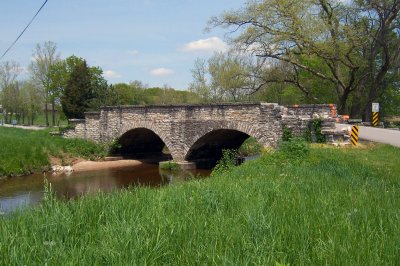
Much of the road and its architecture still exist from those early days. The
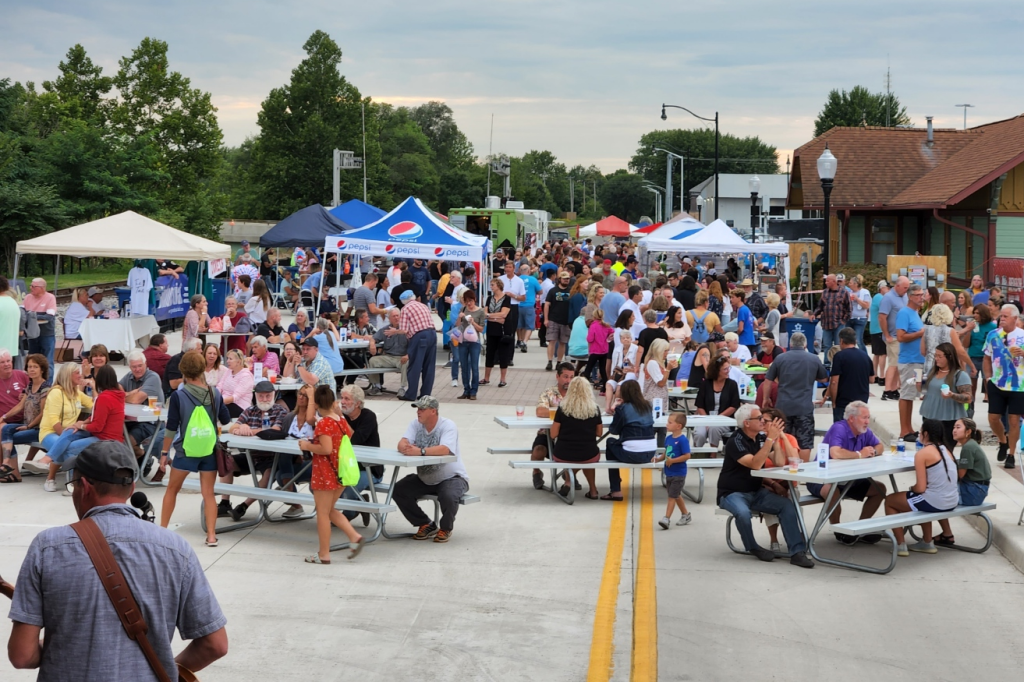
Michigan Road tells the history of our State through its
geography, its people, and its architecture. Through our forests, small
towns, cities, and farms this one road showcases what it
means to be a Hoosier and how our state was built.
The Michigan Road still exists, and you can drive it end to end today.
What was once a dirt path through the woods is now a series of county, state,
and US highways, officially recognized by the State of Indiana as a Historic
Byway.
The Michigan Road winds its way through fourteen counties and more
than two dozen communities. It connects the north with the south and touches
all of the topography we recognize as home in Indiana.
Counties through which the Michigan Road passes: LaPorte, St. Joseph,
Marshall, Fulton, Cass, Carroll, Clinton, Boone, Hamilton, Marion, Shelby,
Decatur, Ripley, and Jefferson.
Cities & towns through which the Michigan Road passes: Michigan City, New
Carlisle, South Bend, Lakeville, LaPaz, Plymouth, Argos, Rochester, Fulton,
Metea, Logansport, Burlington, Michigantown, Kirklin, Indianapolis, Shelbyville,
Greensburg, Napoleon, New Marion, and Madison.
|


|